
In the Field with Frederick Landscaping | November Edition
👩🌾 By Frederick Landscaping, Landscape Design and Sales
Frederick Landscaping | Serving Maryland
By the time November rolls around, most people have mentally closed the book on the garden season. The blooms are gone, the air is gray and it’s easy to overlook what’s still quietly beautiful out there. But if you slow down and take a walk as I did last week, camera in hand (have to enjoy the last of those warm days!), you’ll notice there’s still plenty of structure, texture and color holding strong.
Late Blooms and Subtle Color Plays
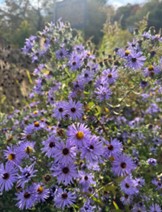
The last of the purple asters are still putting on a show, their cheerful color standing out all the more against a backdrop of muted browns and grays.
A silvery drift of Russian sage catches my eye: its cool-toned foliage playing perfectly off the crimson leaves of the crabapple canopy. 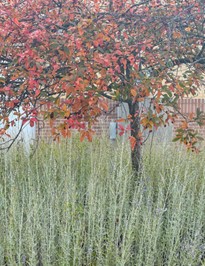
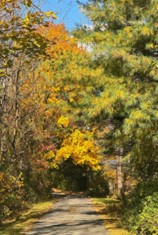
Even the white pines are joining in the seasonal display. Their inner needles are turning a soft golden yellow, echoing the bright sugar maples nearby. It’s a natural process (evergreens shed their oldest needles each fall) and a reminder that even “evergreen” plants have their own version of autumn color.
Strength, Scale and Surprises
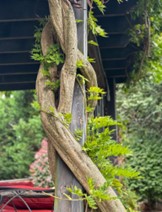
One of my favorite sights this month was a very old wisteria vine that had completely engulfed the post of a pergola. Wisteria can be deceiving; they look so innocent and graceful in a nursery pot, but give them a decade or two and they’ll test the limits of any structure they’re trained on. It’s a beautiful reminder to plan for maturity and give these vines something truly sturdy to grow on.
Underrated Fall Foliage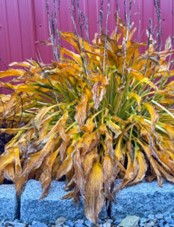
Hostas don’t often get credit for fall color, but their clear yellow leaves glowing against our red landscape shop stopped me in my tracks.
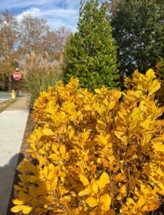
So did another surprise: a row of Clethra alnifolia (summersweet) with such vivid golden fall foliage that I literally circled the block to confirm what I was seeing. After 15+ years in this field, it’s rare for a plant to make me do a double-take but this one did!
Light, Shadow and Structure
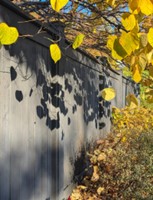 Sometimes it’s not even the plants themselves that stand out, but the way light plays through them. The shadow of redbud leaves against a dark painted fence created a living piece of garden art. It’s a good reminder that hard surfaces (fences, walls, patios, etc) aren’t just functional; they’re canvases for the garden to interact with throughout the seasons.
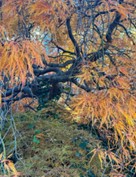 And as the leaves drop, the branch structure of deciduous trees and shrubs steps into the spotlight. The weeping Japanese maple, with its twisting, almost gothic silhouette and fiery remaining foliage, feels perfectly suited to this moody season.
Misunderstood, but Magnificent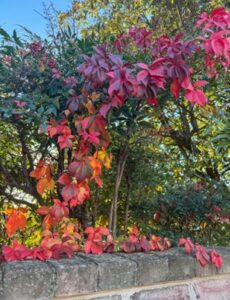
Lastly, a shout-out to Virginia creeper: often mistaken for poison ivy, but easily identified by its five leaflets (and the fact that it won’t make you itch!). Yes, it can be aggressive and will happily overtake anything in its path, but in fall its brilliant red color deserves appreciation. It’s a vivid, if unruly, contributor to November’s palette.
Even as the growing season winds down, there’s so much to observe and learn from the garden. Structure, texture and contrast take center stage and that’s where the real artistry of landscape design shines.
That’s this month’s field research.
See you next month!
– Frederick Landscaping